Overview
Pond Scum is a dioramic VR puzzle-platformer where players physically reach into levels to guide Snappy the Caiman through atmospheric, miniture worlds.
As a core designer, I focused on translating traditional platforming tropes into a stereoscopic, fixed-perspective spatial medium, ensuring readability and tactile puzzle logic.
🌿Pond Scum was a finalist for 'Excellence in Emerging' at the 2024 Australian Game Developer Awards.🌿
Level & Puzzle Design
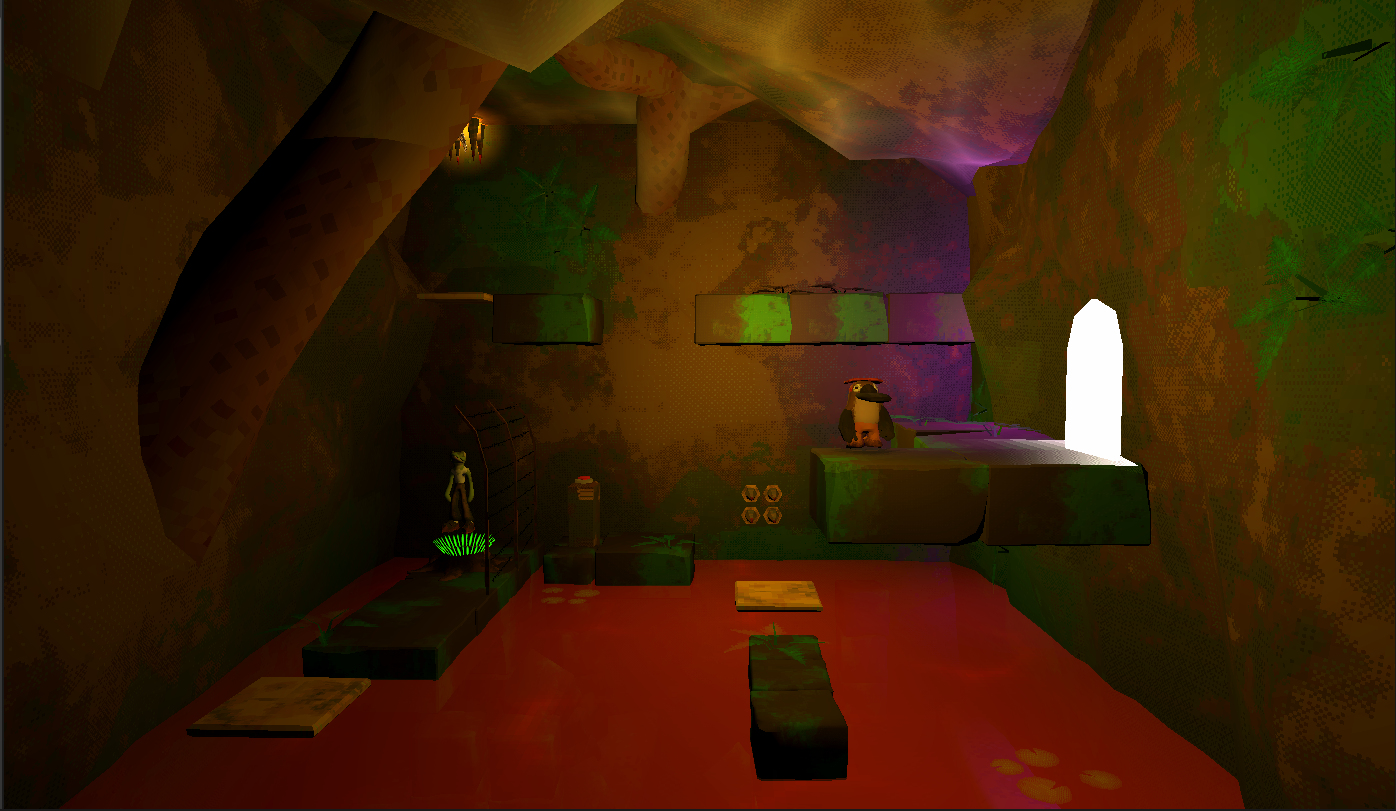
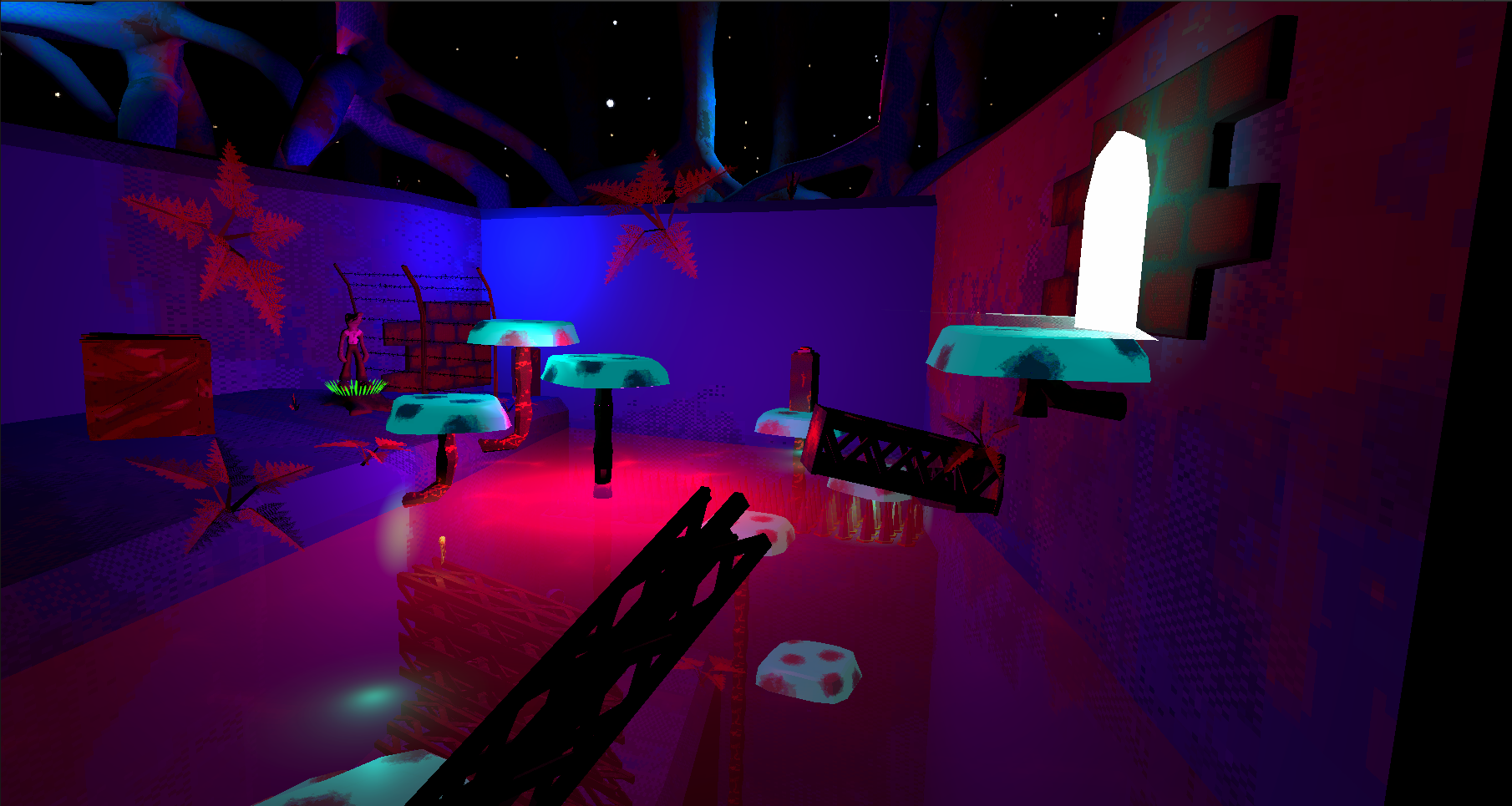
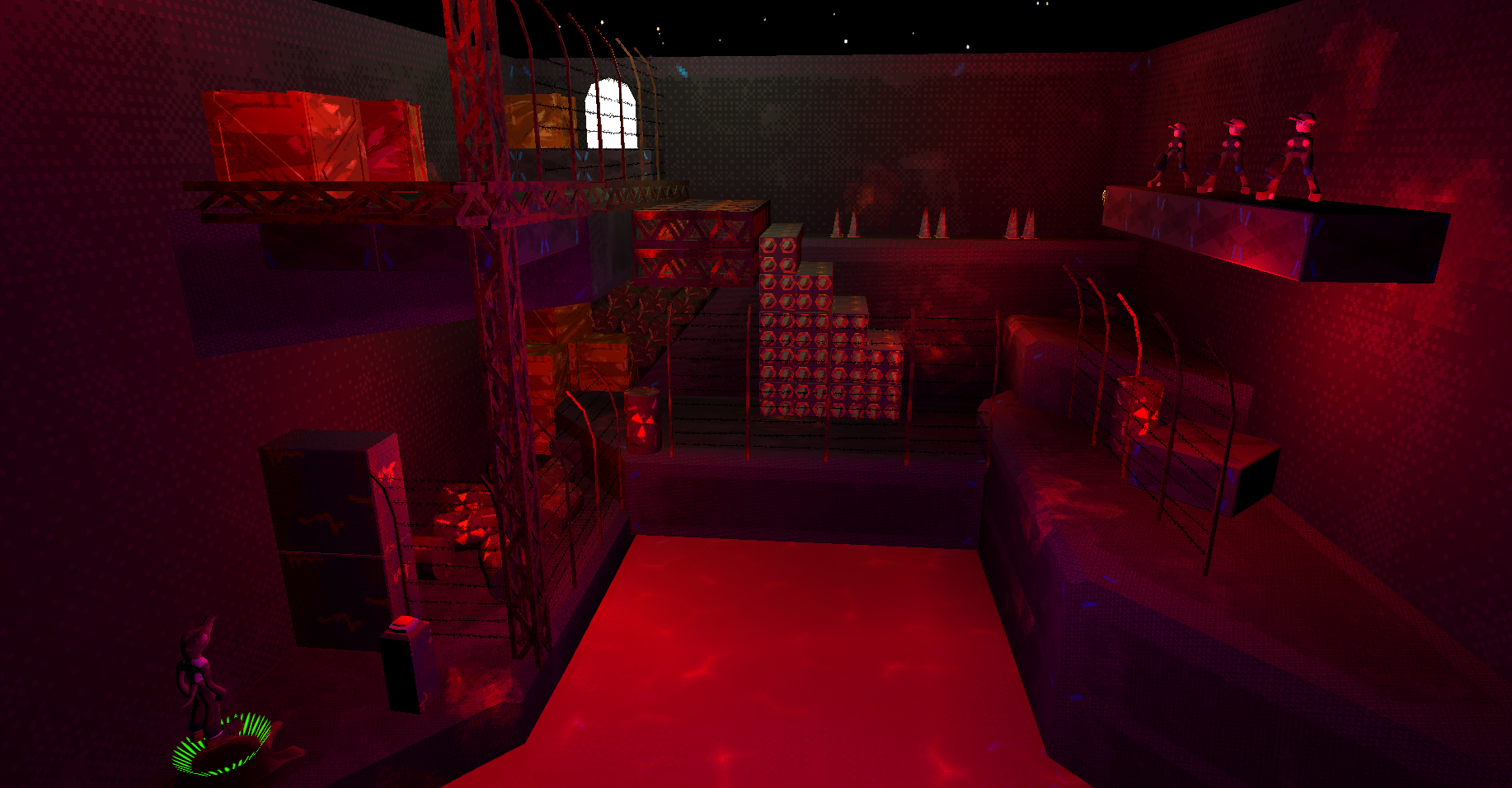
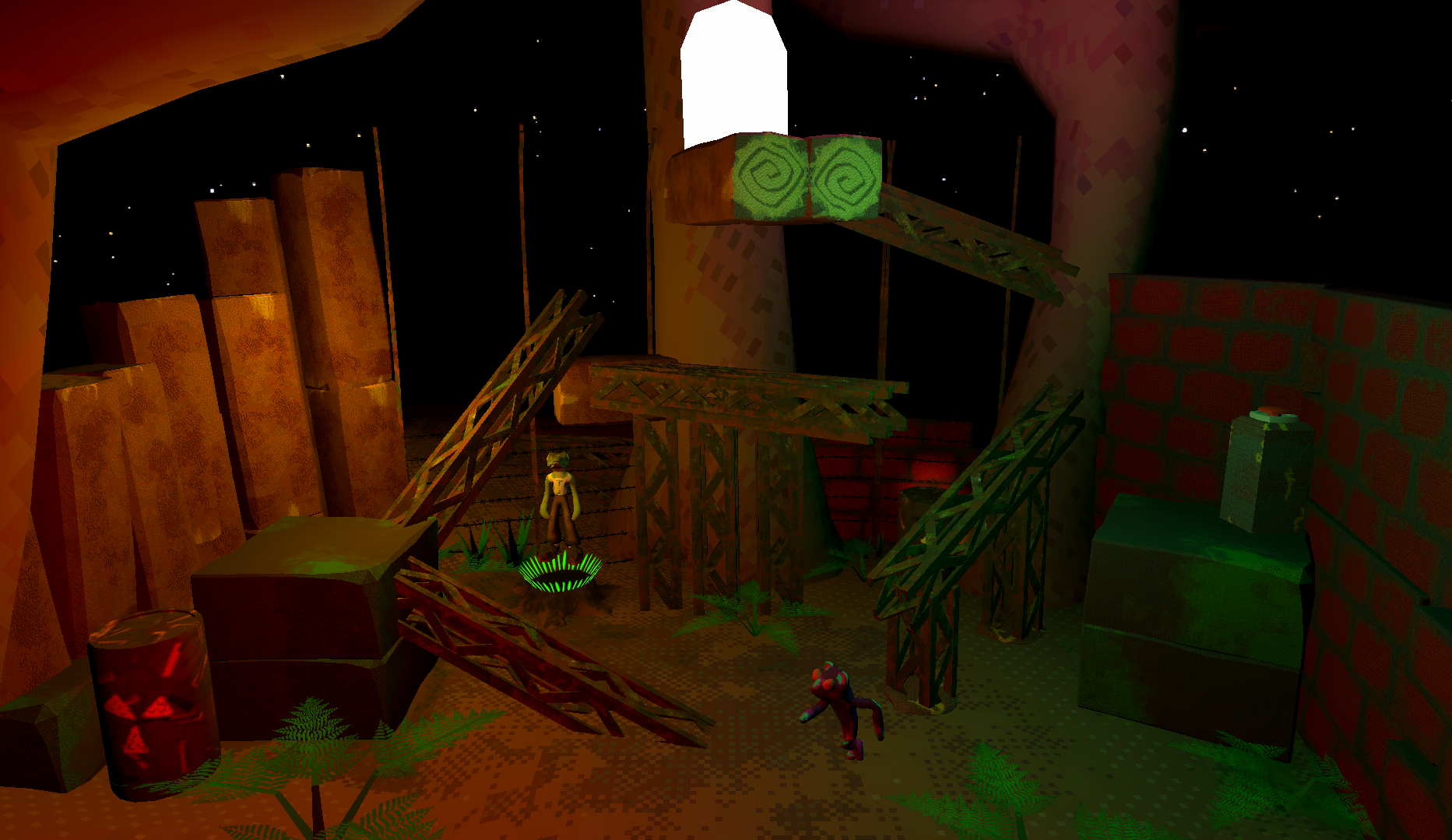
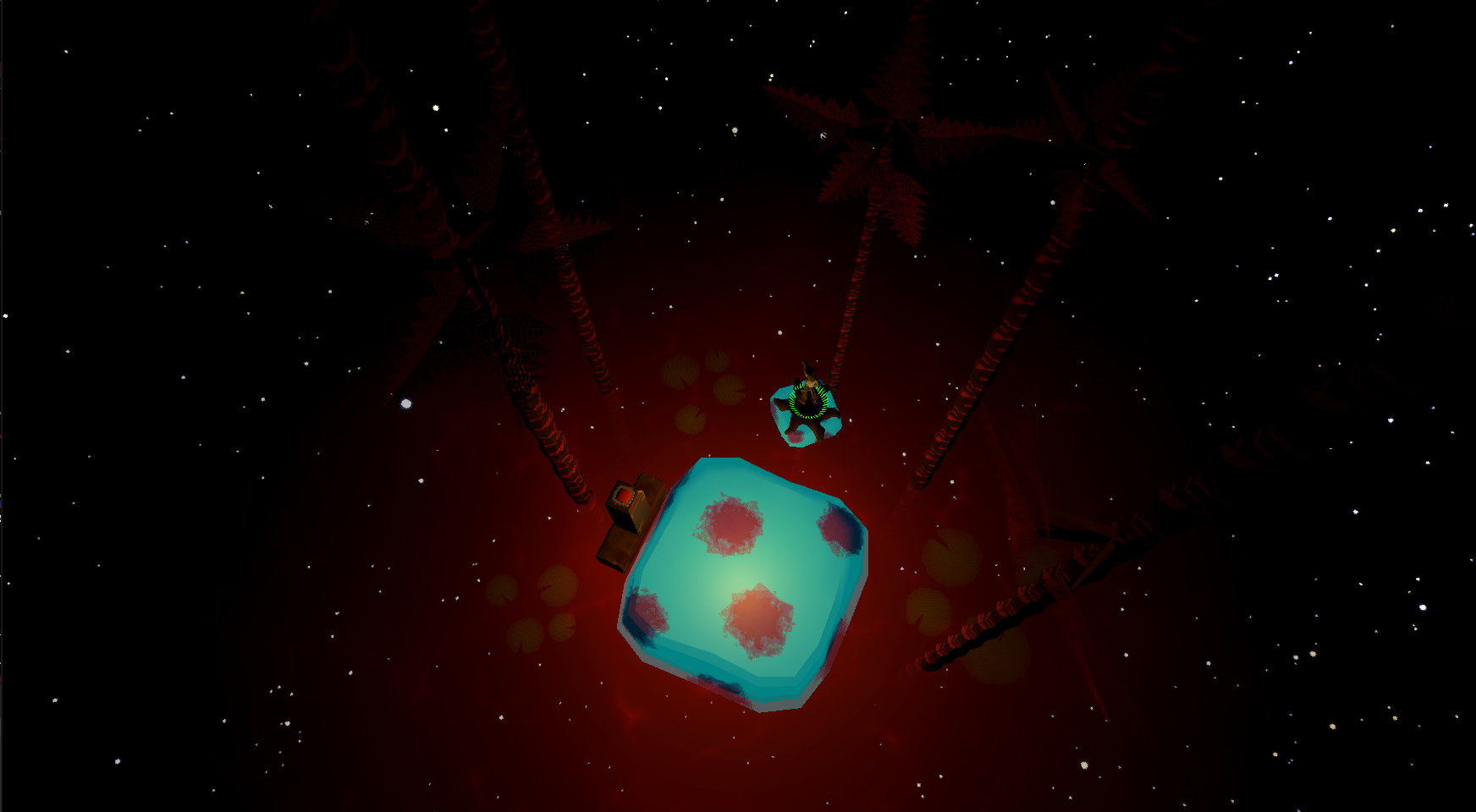
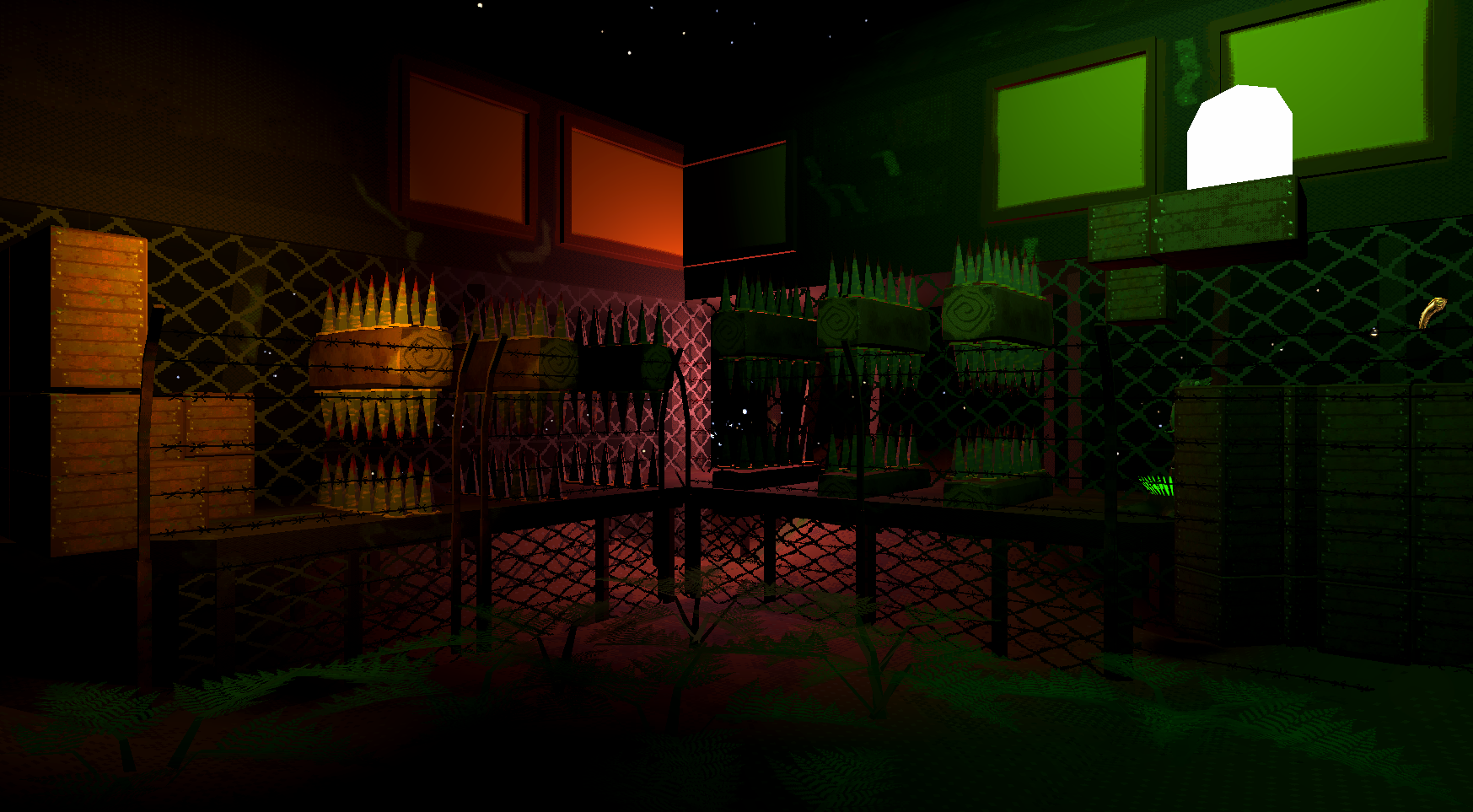
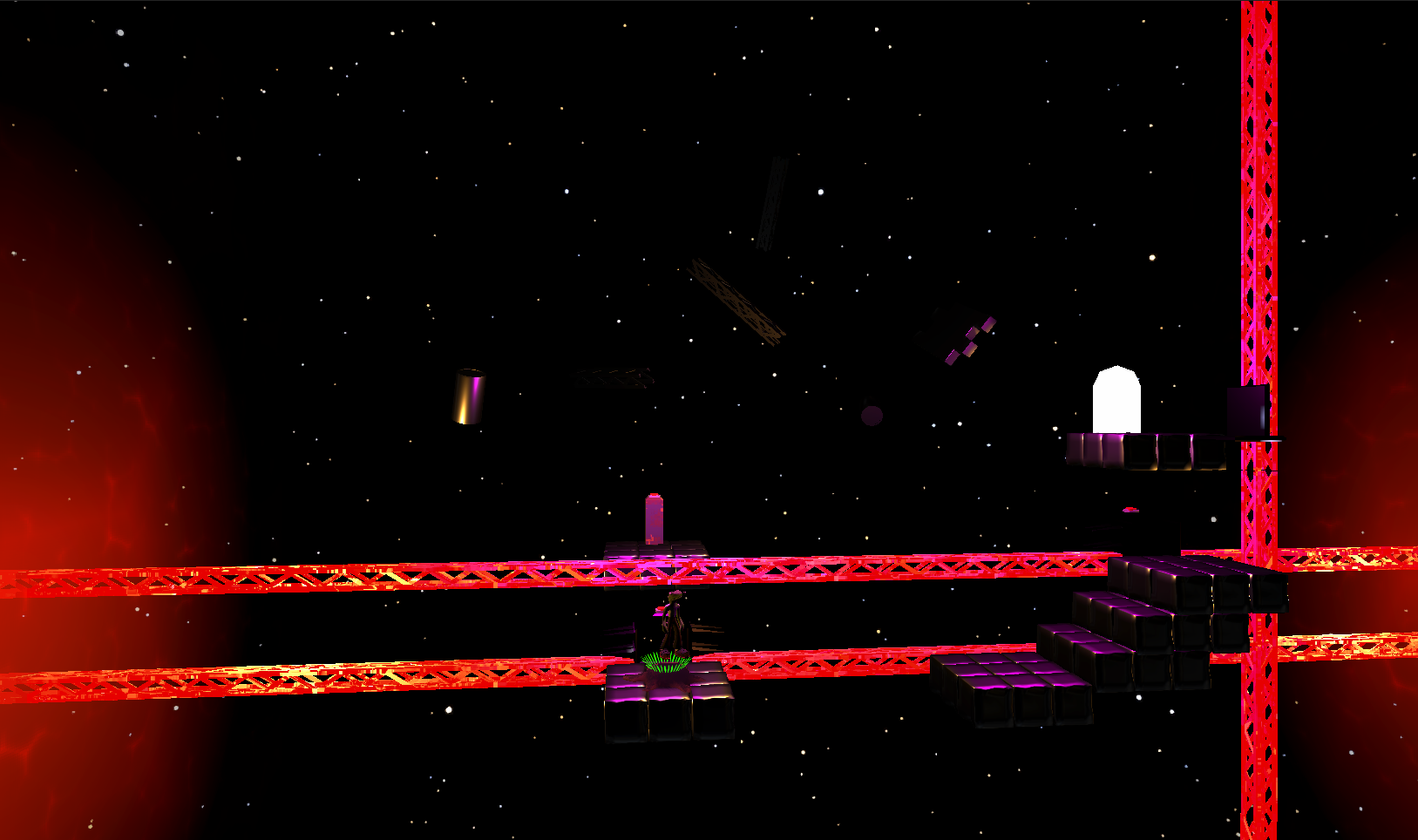
Designing levels in VR with a mostly fixed perspective was a challenging and interesting limitation. It required strict adherence to camera frustums and player sightlines. I reused existing space as much as possible in my puzzle designs to overcome this; utilising 'S'-shaped level design frequently. This allowed me to maximise the playable footprint within limited 3D volumes, ensuring that puzzles remained readable and navigation felt intuitive despite the perspective limitations.
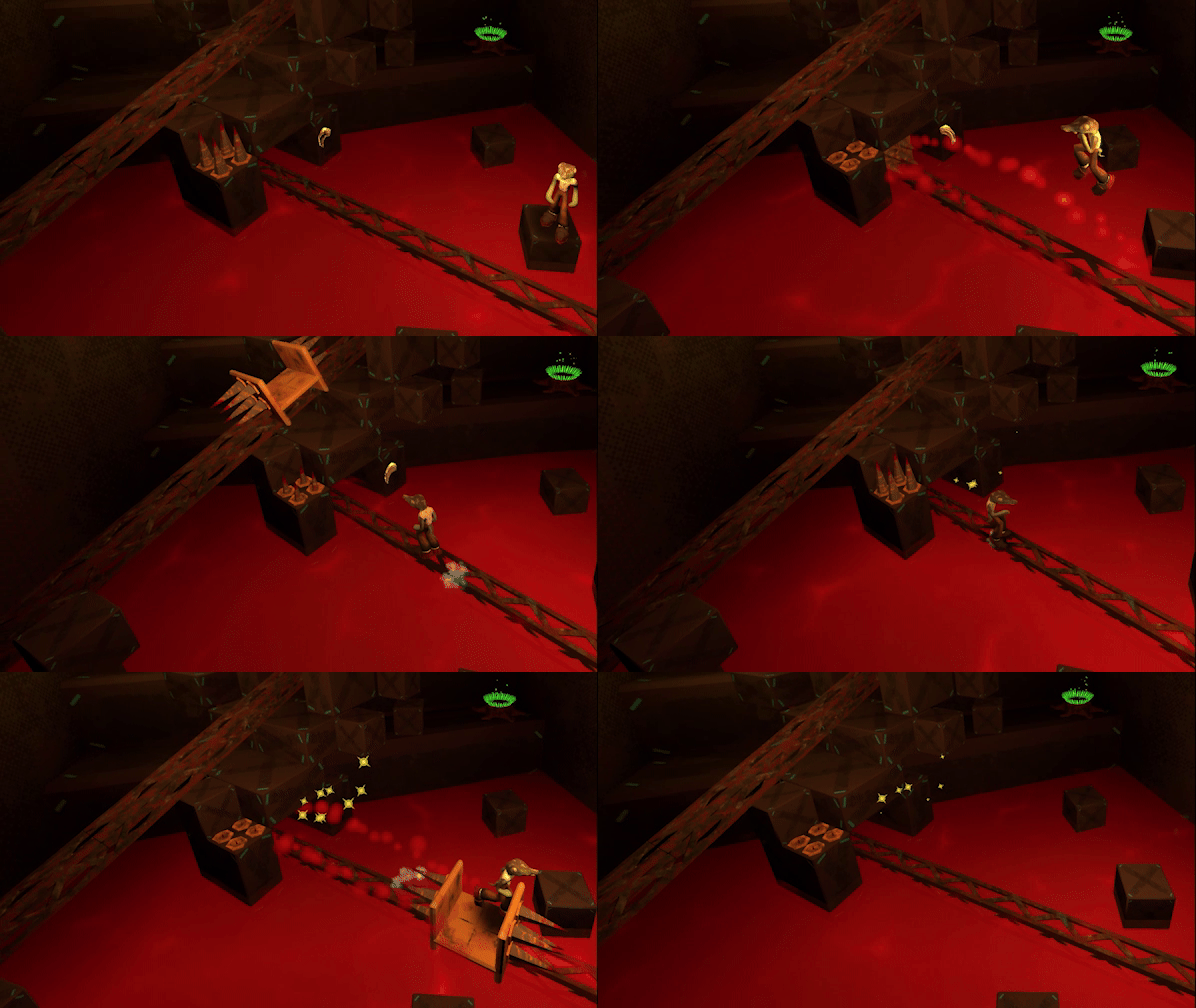
My approach to puzzle design centered on mechanical layering and environmental interaction. Players primarily engaged with the world through a series of physical triggers, buttons that manipulated water levels, activated minecart systems, or toggled moving spotlights in darkened areas. I followed a deliberate progression logic, introducing a single mechanic in isolation before combining it with timed platforming or sequence-based challenges to increase complexity. As Snappy's journey transitioned from the industrial factory to the psychedelic deep swamp, the puzzles became increasingly abstract. This culminated in the final secret world, which served as a mechanical synthesis, requiring players to utilise the full breadth of the game's vocabulary in a highly surreal environment (inspired by Super Mario Sunshine's bonus levels).
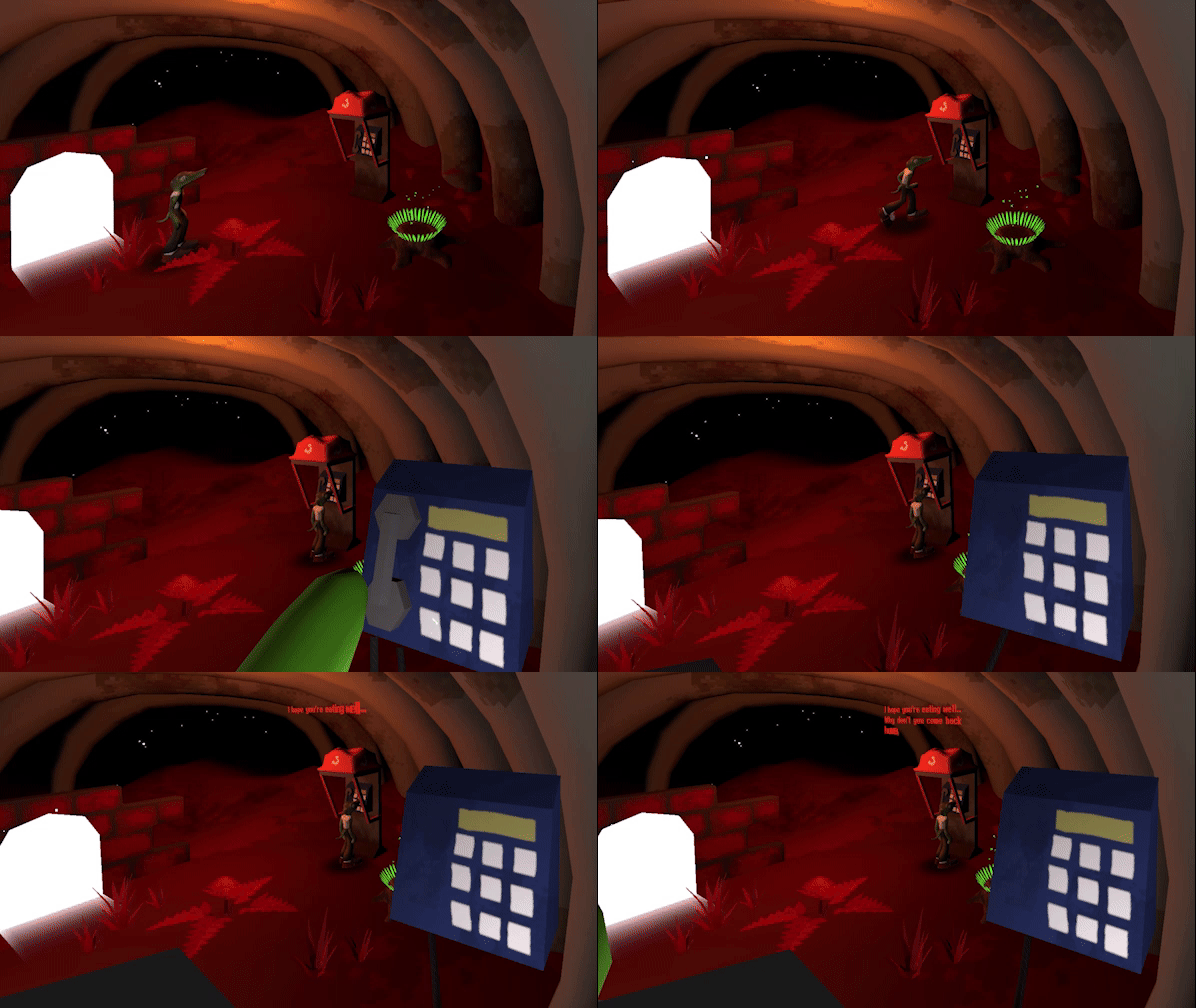
As Pond Scum was designed as an atmospheric narrative experience, I leveraged environmental storytelling to transition the narrative without dialogue. By designing seamless "flow points", I ensured the world felt like a cohesive journey rather than a series of disconnected levels. I also (sparingly) employed atmospheric 'mini-levels' as a way to break up some of the more difficult platforming. These immersive and atmospheric pauses served as a mental reset for the player.
My workflow involved using Gravity Sketch and Unity to greybox layouts directly in VR. This allowed for immediate validation of jump metrics, player sightlines, and puzzle logic, significantly reducing iteration time between the design and art implementation phases.
Production
In a lean six-person team, my production focus was on maintaining high agility and clear communication. I structured our workflow by bifurcating our project management tools; Jira was utilised specifically for technical bug tracking and script development, while Notion served as our creative headquarters for Kanban boards, roadmaps, and brainstorming. This distinction ensured that technical debt never cluttered the creative process. To manage scope effectively, I worked collaboratively with Leads to refine "blue-sky" feature lists into a functional MVP, ensuring we prioritised high-impact deliverables. By proactively managing interdisciplinary dependencies between Art, Audio, and Code, I was able to identify potential bottlenecks early, keeping the pipeline clear and ensuring that every team member had the assets and information they needed to hit their milestones. Under my production direction, Pond Scum was taken from the design stage to a full release in only three months, demonstrating a highly efficient and disciplined development cycle.
Game Design
3rd-person controller and game "feel" design
Dynamic water level system
Dynamic spotlight system
Golden Fang collectable system
Minecart system
Interactables
Enemy AI design
Development (C#)
Platform/water level behaviour scripting
Minecart behaviour scripts
Various movement scripts
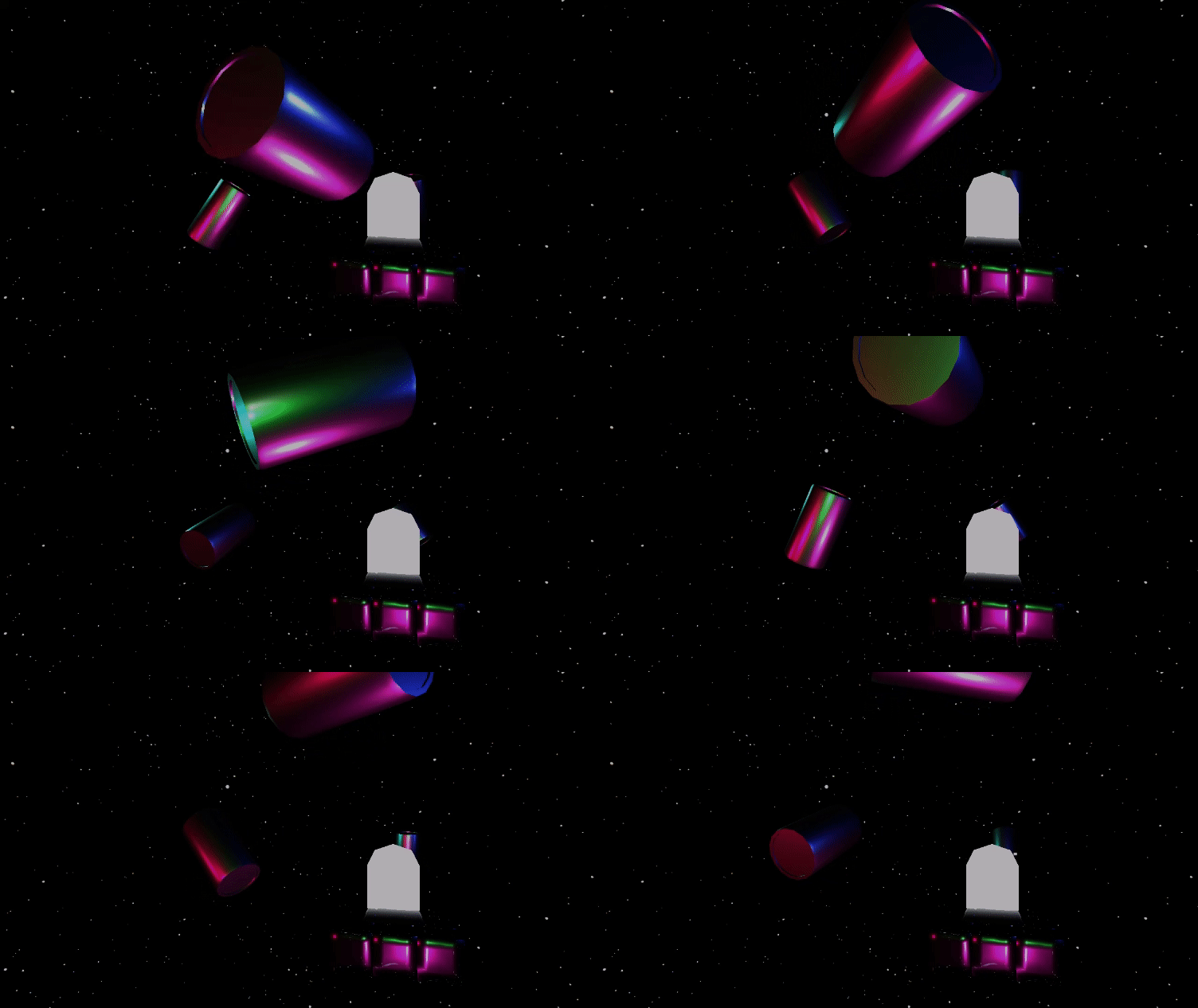
Dynamic lighting script